


This Aurangabad travel guide covers three days in Chhatrapati Sambhajinagar, the gateway to the Ajanta and Ellora Caves, and a city with plenty of its own history, weaving and wholesome vegetarian food.
Aurangabad was founded in 1610 by Malik Ambar, the Abyssinian-born minister of the Ahmadnagar Sultanate, as a town called Khadki. It was later renamed Aurangabad after the Mughal emperor Aurangzeb, who spent many years here as governor of the Deccan, and in 2023 it was officially renamed Chhatrapati Sambhajinagar, after the Maratha king Sambhaji. Its 52 gates earned it the name ‘City of Gates’.
Whether you’re planning a heritage trip or a long weekend, this Aurangabad travel guide covers the top places to visit, the city’s thali culture, Paithani and Himroo weaving, and a practical 3-day plan.
Explore more destinations across India in our Discover India page.
Aurangabad Travel Guide: Plan Your Trip
Trip Snapshot
- Chh. Sambhajinagar, Maharashtra
- October - March
- 3 days
- 2500 - 6000/day
- Chh. Sambhajinagar Airport
Top Places
- Ajanta Caves
- Ellora Caves
- Bibi Ka Maqbara
- Daulatabad Fort
- Grishneshwar Temple
- Panchakki
Food Essentials
- Maharashtrian Thali
- Misal Pav
- Kothimbir Vadi
- Ukadiche Modak
- Shrikhand
Things to Do & Shop
- Paithani & Himroo Weaving
- Thali Trail
- Gulmandi & Shahgunj Bazaars
- Daulatabad Fort Climb
- Paithani Shopping



Where is Aurangabad & Why Visit?
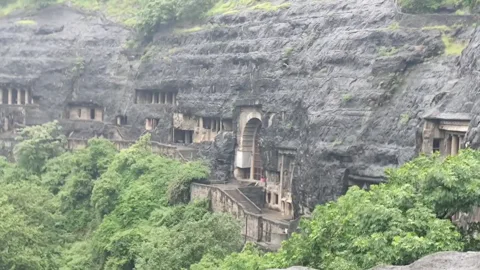
Aurangabad sits in the Marathwada region of central Maharashtra, about 335 km from Mumbai. Most travellers come for two UNESCO World Heritage Sites, the Ajanta and Ellora Caves, but the city rewards a slower look. Within an hour’s drive are a hilltop fort that was once India’s capital, a Mughal mausoleum modelled on the Taj Mahal, one of the twelve Jyotirlingas, and looms that still weave Paithani silk and Himroo fabric by hand.
How to Reach Aurangabad
- Chhatrapati Sambhajinagar Airport (Chikalthana) – about 10 km from the city centre, with flights from Delhi, Mumbai, Hyderabad and Bengaluru
- Chhatrapati Sambhajinagar Railway Station – trains from Mumbai, Pune, Hyderabad and Delhi
- From Mumbai – about 335 km, 5–6 hours via the Samruddhi Expressway
- From Pune – about 235 km, 5 hours
- From Nashik – about 190 km, 4 hours
- From Shirdi – about 110 km, 2.5 hours
Hire a car with a driver for your stay; Ajanta, Ellora and Daulatabad are spread out, and a taxi makes the long days far easier.
Best Time to Visit Aurangabad
- The best time to visit Aurangabad is from October to March
- Summers (April–June) are very hot and dry
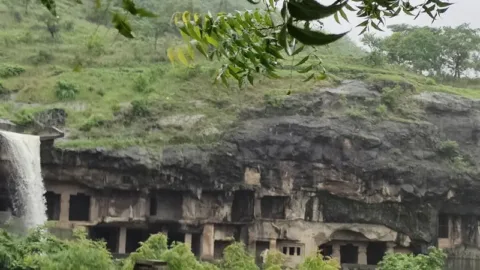
- Monsoon (July–September) turns the hills green and brings waterfalls to Ajanta and Ellora
We visited at the end of July. It rained on and off, the hills around Daulatabad were lush, and the waterfalls at both cave sites were in full flow.
Quick Aurangabad Travel Guide
Getting Around
- Book a car with a driver for all three days; autos and app cabs work well within the city.
- Ellora, Grishneshwar, Khuldabad and Daulatabad lie on the same road, so cover them together.
Things to Know
- Ajanta is closed on Mondays and Ellora on Tuesdays; plan your days around them.
- At Grishneshwar, men enter the sanctum bare-chested, and phones and bags are not allowed inside.
- Daulatabad Fort involves a long, steep climb with many steps.
Practical Tips
- Start early on cave days to beat the heat and the crowds.
- Keep an evening for shopping in the old city and the CIDCO area.
- Carry cash; mobile networks are weak at Ajanta.
Local Travel & Tours
- Plan your cave days with our Ajanta Caves guide and Ellora Caves guide.
- ASI monument tickets can be booked online on the official ASI website.
Where to Stay
- Stay along Jalna Road or in CIDCO for easy access to restaurants and shopping.
- Resorts on the city’s edge offer quiet stays with green lawns.
Culture & Vibe
Aurangabad is a city of layers. Mughal gateways and old bazaars sit beside wide new roads and busy CIDCO markets. Marathi is the main language, Urdu is heard in the old city, and the food reflects both: Maharashtrian home-style cooking alongside thali halls run by Gujarati and Marwari families.
It’s an easy-going city that is used to visitors, best enjoyed slowly between the big cave days.
Aurangabad Travel Guide: Top Places to Visit
In this Aurangabad travel guide, these are the top places to visit, from world-famous caves to the city’s own forts, temples and looms.
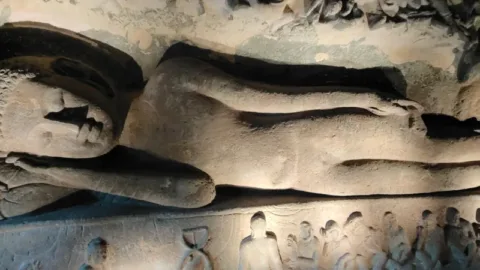
Ajanta Caves
Painted Buddhist caves in a horseshoe gorge, about 100 km away; a full-day trip.
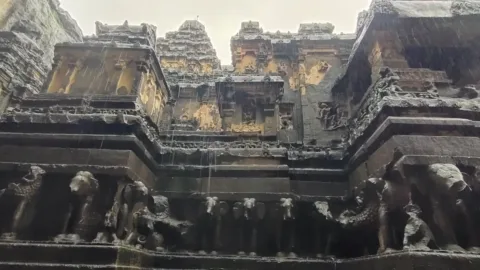
Ellora Caves
Buddhist, Hindu and Jain caves around the Kailasa Temple, 30 km away.
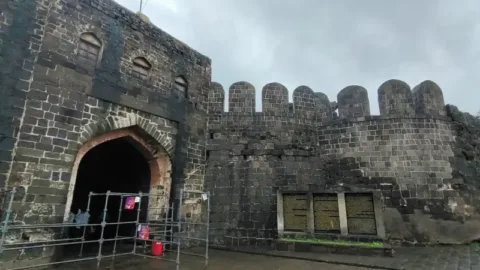
Daulatabad Fort
The hilltop fortress of Devagiri, once India’s capital under Muhammad bin Tughlaq.

Bibi Ka Maqbara
The ‘Taj of the Deccan’, built in 1660 for Aurangzeb’s wife, Dilras Banu Begum.
Also Visit
Panchakki: A 17th-century water mill beside the shrine of the Sufi saint Baba Shah Musafir. Water brought through underground channels from the hills once turned a stone mill to grind grain for pilgrims.
Grishneshwar Temple: The last of the twelve Jyotirlingas, about 1 km from Ellora. The red-stone temple was rebuilt in the 18th century by Ahilyabai Holkar and is covered in fine carvings.
Aurangabad Caves (Buddhist caves on the hill behind Bibi Ka Maqbara), Soneri Mahal, and Khuldabad, where Aurangzeb is buried in a simple grave.
Explore more iconic landmarks and city guides in our Popular Destinations section
Aurangabad Travel Guide: The Thali Trail
No Aurangabad travel guide is complete without its thalis. The city has a strong thali culture, shaped by its Maharashtrian roots and by Gujarati, Marwari and Rajasthani trading families who settled here. A thali is a full meal on one large plate: several vegetables, dal or amti, rice, rotis or bhakri, chutneys, a sweet and buttermilk, often refilled until you stop.
Many restaurants serve unlimited thalis at lunch and dinner, from Maharashtrian spreads with varan-bhaat and puran poli to Gujarati and Rajasthani platters with dal-baati and kadhi. For vegetarians, it is one of the most satisfying food cities in the state.


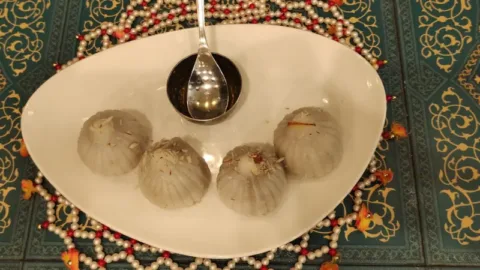

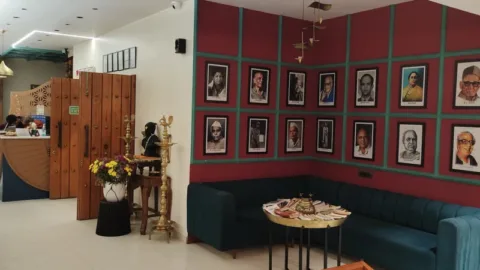

Must-Try Dishes
- Maharashtrian thali with varan-bhaat, bhakri and thecha
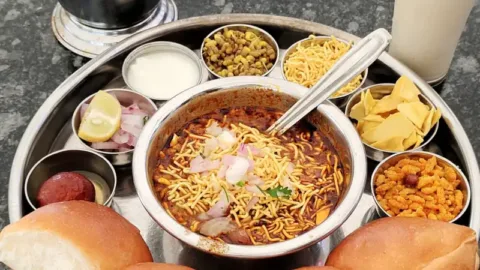
- Misal pav
- Kothimbir vadi
- Ukadiche modak
- Sol kadhi
- Puran poli
- Shrikhand
At Purnabramha we ended dinner with ukadiche modak, steamed rice dumplings filled with coconut and jaggery, served with a spoon of ghee.
Where to Eat in Aurangabad
- Purnabramha Maharashtrian Restaurant – Jalna Road, CIDCO
- Ashoka Veg Restaurant – Nirala Bazar
- Shahibhoj Thali Restaurant – Town Centre, CIDCO
- Green Leaf Vegetarian Cuisine – Town Centre, CIDCO
- Naivedya Veg Thali Restaurant – Jalna Road, CIDCO
- Indiana Red Velvet Restaurant – Garkheda
Purnabramha is our pick for an authentic Maharashtrian meal, with kothimbir vadi, a thali of home-style dishes and modak to finish. For an unlimited thali, Shahibhoj and Naivedya are local favourites.
Snacks on the Road
- Jogeswari Misal & Bhel, on the way to Khuldabad – misal pav after Ellora
- Sree Krishna Pure Veg, Balapur – breakfast on the way to Ajanta
- Ajanta Green Restaurant & Resort, Fardapur – lunch near Ajanta
The misal stop on the Ellora road was a highlight: a fiery bowl of sprouts curry topped with farsan, onion and lemon, mopped up with soft pav.
For more traditional dishes and regional flavours, explore our Indian Vegetarian Recipes page.
Aurangabad Travel Guide: Weaving & Shopping
Weaving Experiences
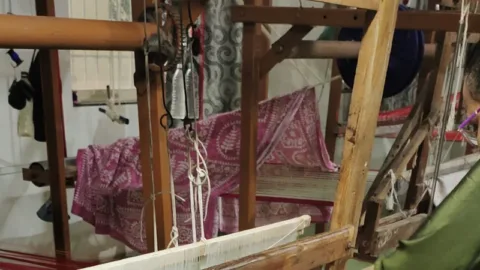
- Watch Paithani weavers at the handloom
- Visit a Himroo weaving workshop near Zaffar Gate (Jaffar Gate)
- Climb Daulatabad Fort
- Darshan at Grishneshwar Jyotirlinga
Paithani takes its name from Paithan, about 50 km south of the city. These silk sarees are woven with real zari, with peacock, parrot and lotus motifs, and a single saree can take weeks to finish. Himroo, a softer blend of silk and cotton with Persian-style patterns, is said to have arrived when Muhammad bin Tughlaq moved his capital to Daulatabad in the 14th century.
Shopping
What to Buy
- Paithani sarees and dupattas
- Himroo shawls, fabrics and stoles
- Handloom cushion covers and bedcovers
- Local crafts and souvenirs
Where to Explore
- Mughal Silk Store – CIDCO and on the caves road, for Paithani and Himroo
- Gulmandi, Shahgunj and the Chowk area – Shivshahi Paithani and other saree shops
- Zaffar Gate and Old Mondha Road – Himroo fabrics and workshops
- CIDCO Town Centre – shopping and restaurants
Mughal Silk Store was our pick for its range of Paithani and Himroo, though the old-city bazaars are worth a wander too. Prices vary widely, so compare a few shops before buying a Paithani.
Aurangabad Travel Guide: 3-Day Itinerary
Day 1 – City sights: Bibi Ka Maqbara in the morning, then Panchakki and a Himroo workshop near Zaffar Gate. Lunch at Ashoka Veg Restaurant, Nirala Bazar. Spend the afternoon shopping at Gulmandi, Shahgunj and Mughal Silk Store in CIDCO, and end with dinner at Purnabramha.
Day 2 – Ellora, Grishneshwar and Daulatabad: Leave by 7 am for the Ellora Caves, then visit Grishneshwar Temple next door. Stop at Jogeswari Misal & Bhel near Khuldabad, climb Daulatabad Fort on the way back, and have dinner at Shahibhoj Thali or Green Leaf.
Day 3 – Ajanta: Start at 7 am for the Ajanta Caves, with breakfast at Sree Krishna Pure Veg in Balapur and lunch at Ajanta Green in Fardapur. Browse the silk stores on the way back, and have a farewell thali at Naivedya.
Looking for short trips? Explore curated Getaways across India including beaches, forests, and heritage stays.
Aurangabad Travel Guide: Practical Tips
- Avoid Ajanta on Mondays and Ellora on Tuesdays
- Book a car with a driver
- Start early on cave days
- Carry cash and water
- Keep an evening for shopping
Pace the trip with a lighter city day between the two cave days, and Aurangabad never feels rushed.
Beyond the caves, what stays with you is the city’s quieter craft: weavers at their looms, generous thalis and centuries of history around every gate. This Aurangabad travel guide only begins to capture it.
The stories behind India’s food culture add another layer to every journey, something we explore further in our Culinary Chronicles.
Aurangabad Travel Guide FAQs
Here are some frequently asked questions from this Aurangabad travel guide.
How many days are enough for Aurangabad?
Three days are ideal: one for the city sights, one for Ellora, Grishneshwar and Daulatabad, and one for Ajanta.
What is Aurangabad famous for?
Aurangabad is famous as the gateway to the Ajanta and Ellora Caves, and for Bibi Ka Maqbara, Daulatabad Fort, Paithani and Himroo weaving, and its vegetarian thalis.
Is Aurangabad now called Chhatrapati Sambhajinagar?
Yes. The city was officially renamed Chhatrapati Sambhajinagar in 2023, though many people still call it Aurangabad.
Where can I buy Paithani sarees in Aurangabad?
Try Mughal Silk Store in CIDCO and on the caves road, the saree shops of Gulmandi and Shahgunj, and the Himroo workshops near Zaffar Gate.
Which days are Ajanta and Ellora closed?
Ajanta is closed on Mondays and Ellora on Tuesdays, so plan your cave days around them.
Discover more from CookingTantra
Subscribe to get the latest posts sent to your email.